Schedule a consultation today. The sooner we identify the problem, the faster and easier it will be to treat.
We’ll put a smile back on your face in no time.
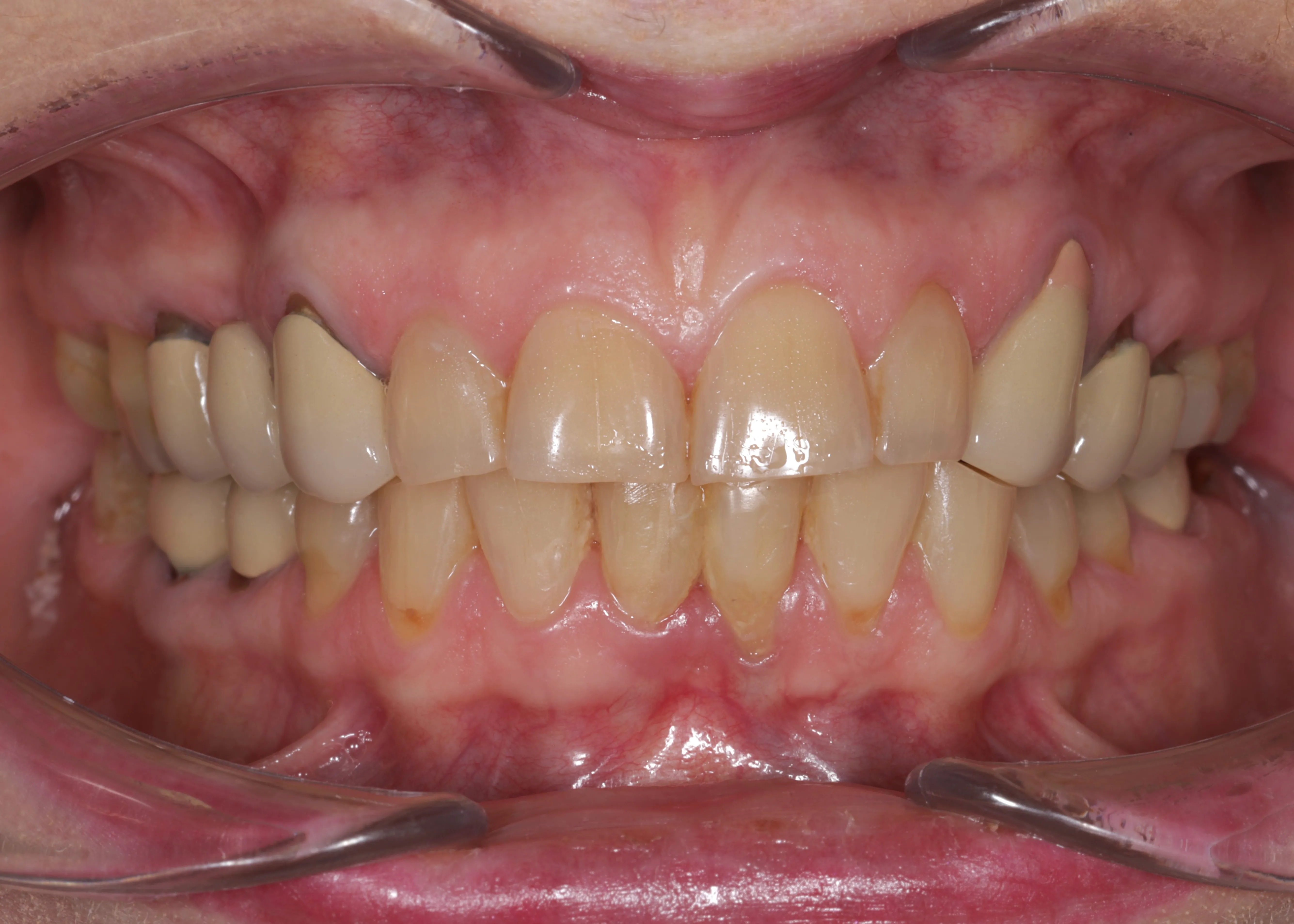
severe tooth wear
many missing teeth
old removable dentures
many old fillings and crowns
difficulty chewing food
changes in facial shape
With significant tooth wear or tooth loss, the height of the lower third of the face changes, while comprehensive dental restoration helps restore a harmonious smile appearance.
If several or many teeth are missing, full-mouth rehabilitation makes it possible to completely restore the dental arch and regain the ability to chew normally, speak comfortably, and smile with confidence.
Full-mouth rehabilitation helps restore the correct relationship between the teeth and jaws, eliminating overload and discomfort while chewing.
Due to an incorrect bite or tooth loss, the chewing muscles may work improperly. Full-mouth rehabilitation restores jaw balance and reduces strain on the muscles and joints.
When teeth lose their anatomical shape over time, full-mouth rehabilitation restores their natural proportions, bringing back chewing comfort and a natural-looking smile.
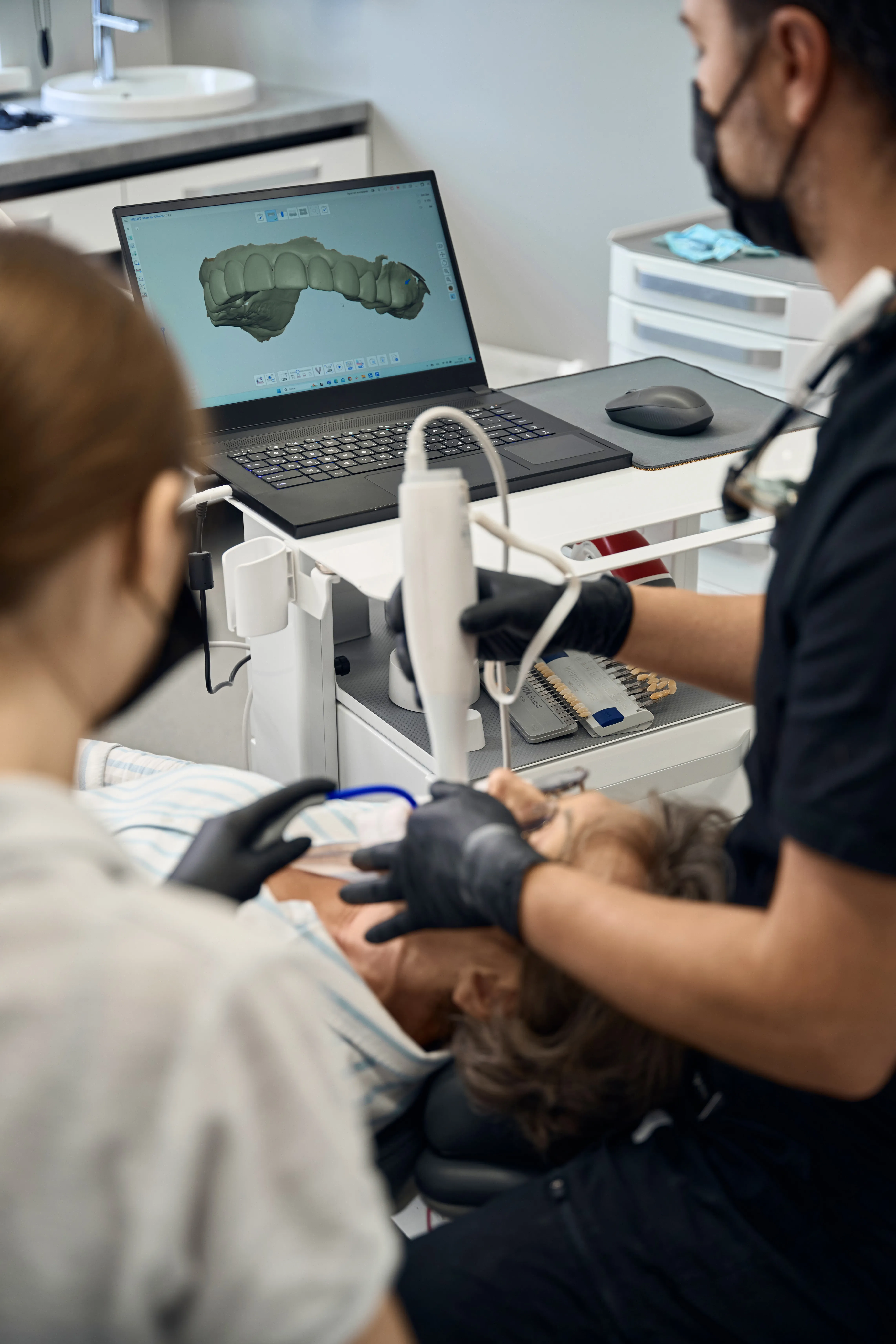
A detailed examination of the teeth, gums, and bite is performed, along with the necessary photographs, X-rays, and digital scans of the jaws. This helps identify the causes of the problems and create an accurate treatment plan.
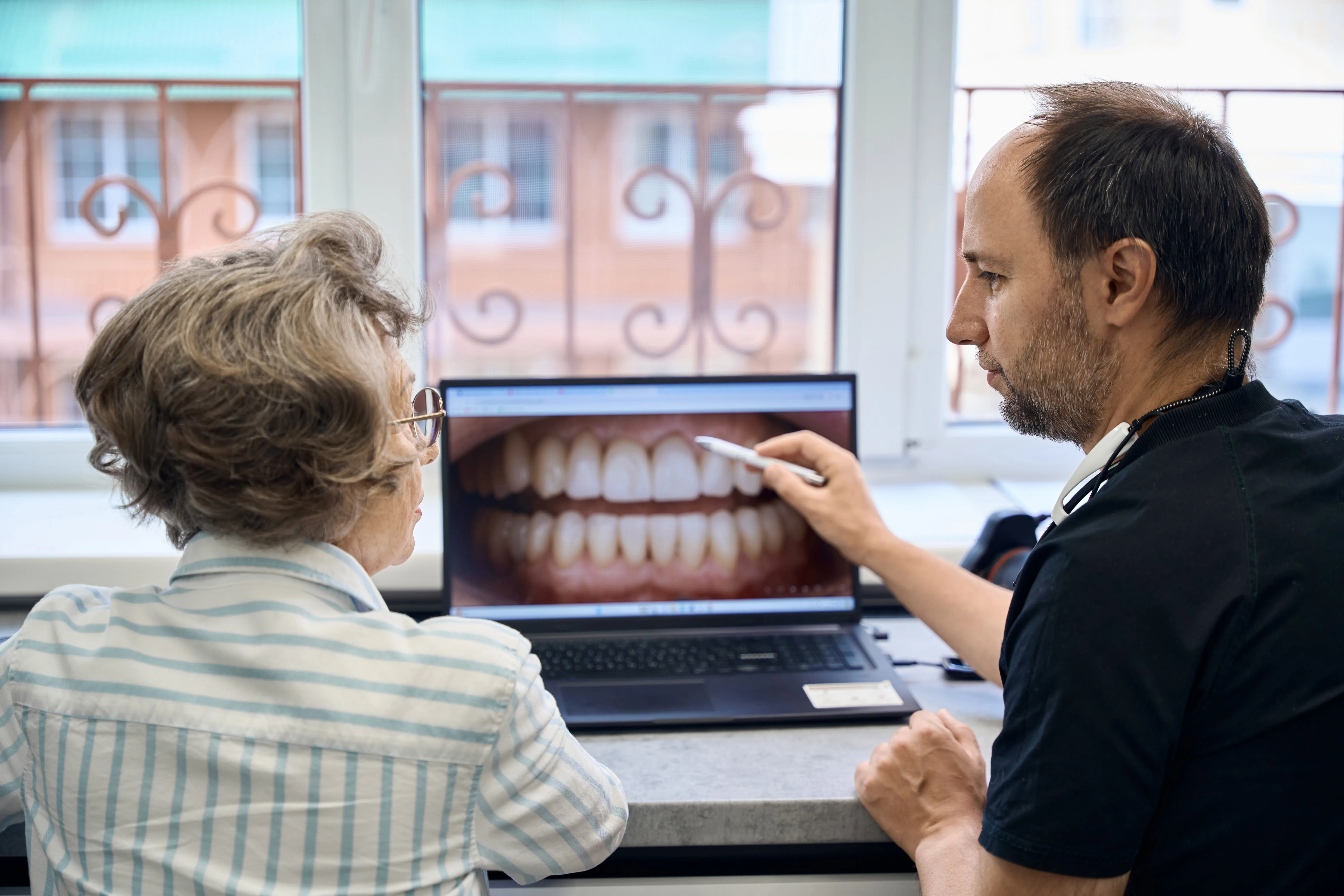
Based on the diagnostics, a digital model of the future teeth is created, taking into account function, aesthetics, and facial proportions. The patient can see what the result will look like before treatment begins.
If necessary, gum treatment, root canal treatment, extraction of hopeless teeth, or implant placement is performed. This creates a reliable foundation for future prosthetic treatment.
At this stage, temporary restorations are made and placed. They allow the patient to adapt to the new bite height and check comfort and aesthetics before the final prosthetic stage.
Individual crowns, veneers, or prostheses made in a digital laboratory closely resemble natural teeth. After the restorations are fixed, the doctor carefully checks the bite and, if necessary, makes adjustments to achieve an ideal result.


We take a comprehensive approach to treatment — from diagnostics to the full restoration of smile function and aesthetics.
We use modern digital technologies that allow us to create a 3D visualization of the future smile before treatment begins and plan precise orthopedic constructions.
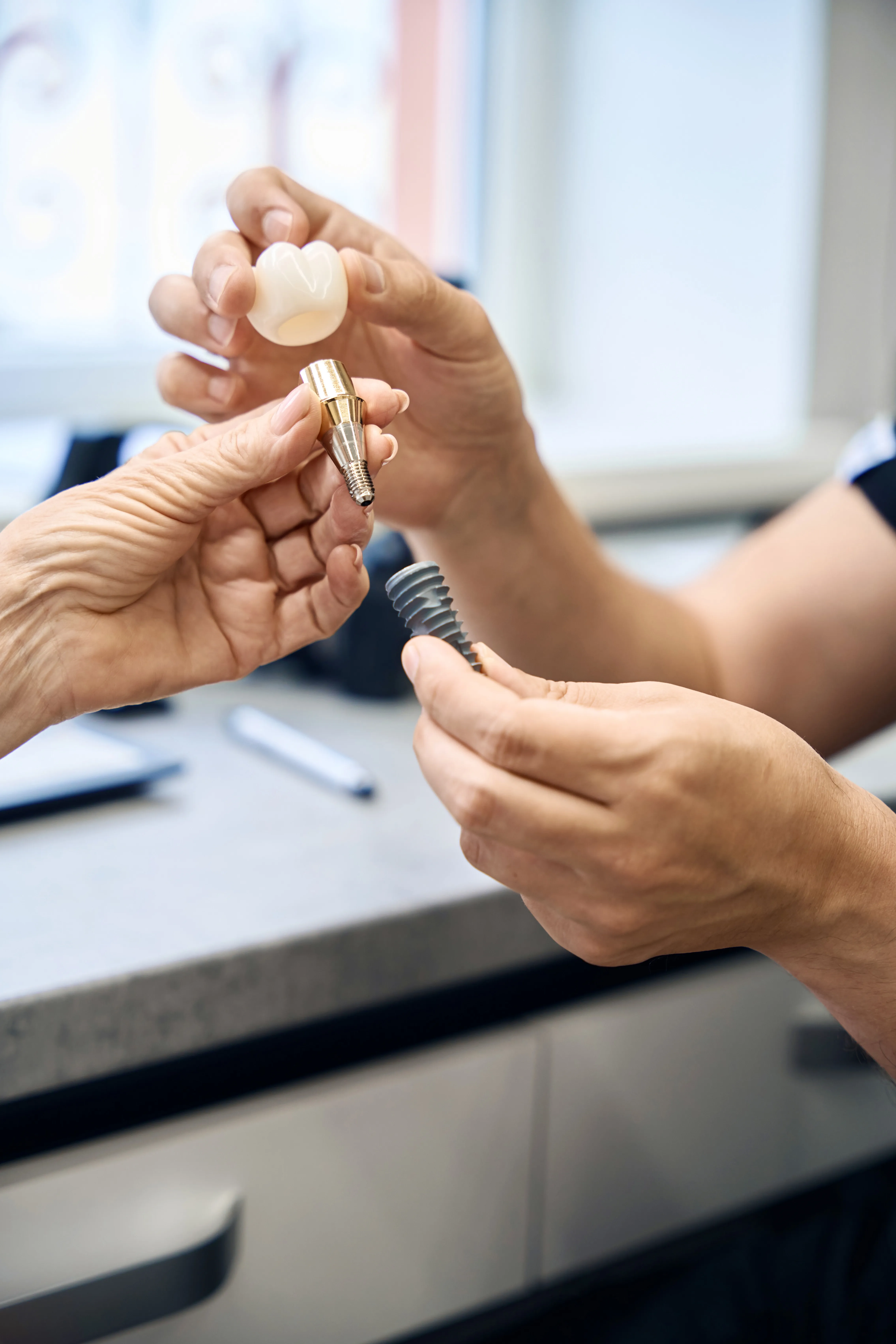
Modern implant methods allow us to restore dental arches even in cases of complete tooth loss and bring back smile aesthetics and comfort when eating favorite foods.

Modern dentistry makes it possible to restore aesthetics and full speech and chewing function to a person who has lost all or most of their teeth. This is achieved through full-mouth implant-supported prosthetics. Patients with partial or complete tooth loss often don't know which restoration option to choose. This information on full-mouth prosthetics will be especially useful.
The implant-supported prosthetics method at Digital Dental Clinic offers the most natural possible tooth restoration, tailored to each patient's individual characteristics. This method is used when most teeth have been lost, or when old dentures need replacing. As a person ages, the shape of their face changes, and prosthetic restorations placed earlier can become uncomfortable, making it difficult to chew. Implant-supported prosthetics is also effective in cases of severe tooth wear or when there are many old fillings and crowns.
Comprehensive tooth restoration brings back the harmony and aesthetics of a smile, restores normal chewing and speech, and restores confidence when speaking with others. When is full-mouth prosthetics needed:
When teeth are missing or severely worn, the bite becomes misaligned, facial proportions change, and the chewing muscles work incorrectly. Dental prosthetics restores jaw balance and reduces strain on the muscles, helping a person avoid pain and overload of the temporomandibular joint. Restoring the natural size and shape of teeth after they've lost their anatomical form improves chewing comfort and gives the smile back its aesthetics.
The All-on-4 and All-on-6 protocols are modern prosthetic methods in which a fixed prosthesis is anchored on 4 or 6 implants. Features of the protocols:
FeatureAll-on-4All-on-6Number of implants4 implants6 implantsPlacement2 vertical implants in front, 2 angled in the lateral areasevenly distributed across the jawWhen it's usedwhen bone volume is limitedwhen there's sufficient bone volume for greater stability of the restorationAdvantagesthe angled placement of implants avoids the need for bone grafting surgery; temporary crowns can be placed as early as 1–3 days after implant placementbetter distribution of chewing load
The All-on-4 protocol is less expensive due to the smaller number of titanium implant bases. These technologies make it possible to restore an entire arch of teeth at once, rather than placing each implant separately.
Implant-supported dental prosthetics offers a number of advantages compared to removable devices. Full-mouth dental implantation provides:
Implant-supported prosthetics provides maximum stability — the prosthesis won't shift while speaking or eating. Because the titanium posts evenly transfer chewing loads to the jawbone, the bone tissue maintains its volume. With partial prosthetics for back teeth, the patient's own teeth aren't affected, since they don't serve as the foundation for the restoration and don't need to be ground down.
Implant-supported prosthetics solves many problems. It restores speech, chewing, and aesthetic function, eliminates jaw discomfort and pain, and changes facial aesthetics. How the implant prosthetics process works at DDC Clinic:
Implant-supported dental prosthetics restores a proper bite, a natural tooth appearance, and a harmonious smile and facial features.
Several factors affect the price of dental prosthetics in Kyiv: the protocol used (All-on-4 or All-on-6), the prosthesis material, the implant brand, and the condition of the bone tissue. Book a consultation at DDC Clinic today and get an individual cost estimate for your dental prosthetics.